Vitamin D und Krebsprävention: Was Möller’s Omega-3 für Menschen ab 50 besonders macht
Ab dem 50. Lebensjahr werden Gesundheit und Prävention immer wichtiger. Neben Omega-3-Fettsäuren rückt Vitamin D in den Fokus – nicht nur für starke Knochen, sondern auch für die Krebsprävention.
Studien aus Deutschland bestätigen, dass eine tägliche Ergänzung von Vitamin D das Risiko, an einer Krebserkrankung zu versterben, deutlich senken kann. (Das allgemeine Erkrankungsrisiko an Krebs wird durch Vitamin D nach der aktuellen Studienlage nicht verringert.)
Möller’s Omega-3 bietet für die Generation 50plus eine besonders praktische Lösung für die tägliche Versorgung.
Vitamin D und Krebs – aktuelle Studien für die Generation 50plus
Das Deutsche Krebsforschungszentrum (DKFZ) und internationale Forschung haben Folgendes gezeigt:
Die tägliche Einnahme von Vitamin D ab 50 Jahren reduziert die Krebssterblichkeit um etwa 12 % – unabhängig von nachgewiesenem Mangel.
Menschen ab 70 Jahren profitieren laut Auswertung besonders stark von einer konsequenten Vitamin-D-Versorgung.
Effektiv ist die regelmäßige, tägliche Einnahme – statt einer hochdosierten, seltenen Einzelgabe
Warum ist Möller’s Omega-3 besonders empfehlenswert?
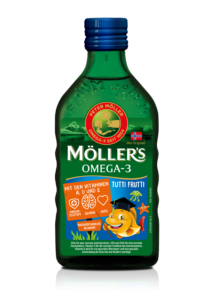
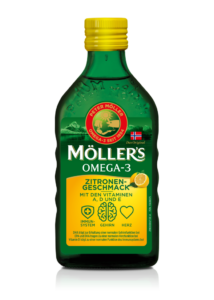
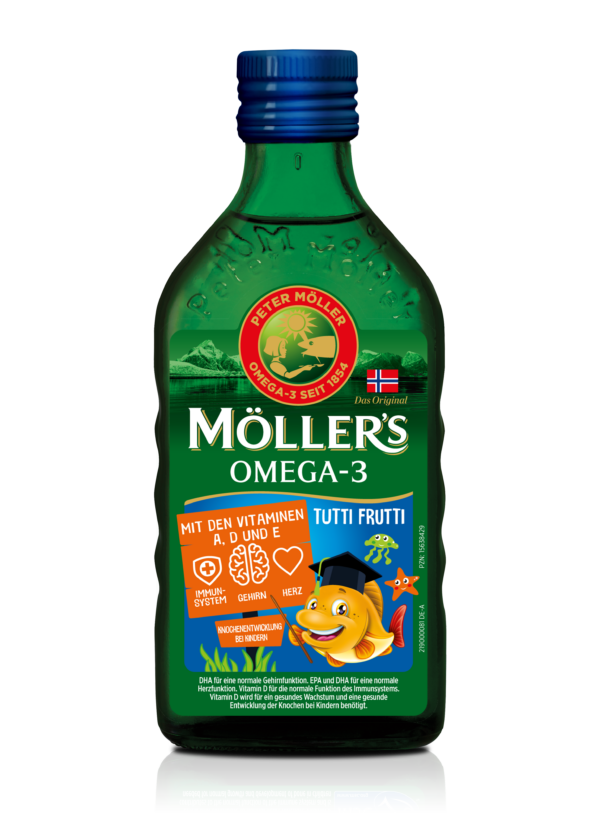
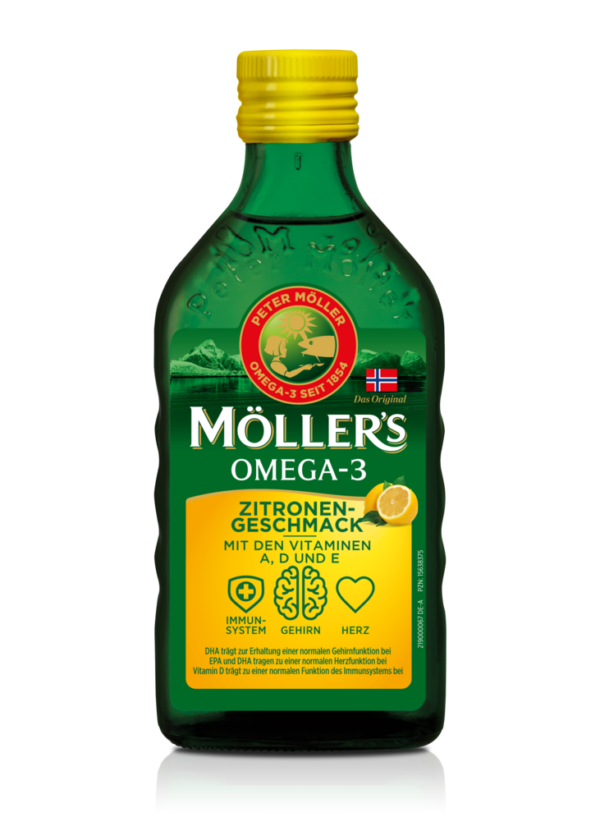
Mit Möller’s Omega-3 Öl gelingt die tägliche Einnahme von Vitamin D ganz einfach:
5 ml Öl liefern die optimale Menge für Erwachsene ab 50 Jahren.
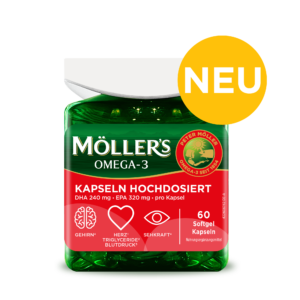
Neben Vitamin D enthält Möller´s Omega-3 die wertvollen Omega-3-Fettsäuren EPA und DHA, die zur normalen Herzfunktion und zur Unterstützung von Gehirn und Sehkraft beitragen.
Die Einnahme erfolgt unkompliziert zu einer Mahlzeit, entweder pur oder als Zugabe in Joghurt, Müsli oder Salat.
Vitamin D, Omega-3 und starke Abwehrkräfte im Alter
Vitamin D trägt zur normalen Funktion des Immunsystem, zur Erhaltung gesunder Knochen und Muskeln sowie zur normalen Aufnahme und Verwertung von Calcium und Phosphor bei. Die Kombination mit Omega-3-Fettsäuren wie EPA und DHA bildet besonders für Menschen ab 50 eine sinnvolle Ergänzung der täglichen Nährstoffversorgung.
Gerade in den sonnenarmen Monaten und bei einseitiger Ernährung kann die Versorgung mit Vitamin D kritisch werden – hier bietet Möller’s Omega-3 eine praktische und bewährte Lösung zur Unterstützung Ihrer Gesundheit im Alter.
FAQ – Die wichtigsten Fragen für Menschen ab 50
Warum ist Vitamin D ab 50 so wichtig? Mit zunehmendem Alter nimmt die körpereigene Produktion von Vitamin D ab und das Risiko für verschiedene Krankheiten steigt. Die tägliche Ergänzung von Vitamin D unterstützt nachweislich die Erhaltung gesunder Knochen, Muskeln und trägt zur normalen Funktion des Immunsystems bei. Studien zeigen außerdem, dass regelmäßige Einnahme die Sterblichkeit bei bestehenden Krebserkrankungen senken kann. Das Risiko, neu an Krebs zu erkranken, wird dadurch laut aktueller Forschungslage jedoch nicht beeinflusst
Kann ich den Bedarf über die Ernährung decken? In Deutschland reicht die normale Ernährung meist nicht aus, um den empfohlenen Vitamin-D-Bedarf zu decken – gerade im Winter. Nahrungsergänzungen wie Möller’s Omega-3 sind daher eine sinnvolle Möglichkeit für eine zuverlässige Versorgung
Welche Dosierung wird empfohlen? 10–20 µg Vitamin D täglich für Erwachsene, wie sie in 5 ml Möller’s Omega-3 enthalten sind.
Sind Omega-3-Fettsäuren zusätzlich wichtig? Ja. Die Europäischen Behörde für Lebensmittelsicherheit (EFSA) bestätigt: Omega-3-Fettsäuren DHA und EPA tragen bei regelmäßiger Einnahme zur normalen Herzfunktion, zur Erhaltung der normalen Gehirnfunktion und zur normalen Sehkraft bei – das ist gerade im Alter besonders bedeutsam.
Die tägliche Aufnahme von Vitamin D und Omega-3-Fettsäuren mit Möller’s Omega-3 ist für Menschen ab 50 eine nach aktuellem Stand besonders sinnvolle Ergänzung.
Vitamin D trägt zur Erhaltung gesunder Knochen, Muskeln und einer normalen Funktion des Immunsystems bei. Omega-3-Fettsäuren EPA und DHA unterstützen die normale Funktion von Herz, Gehirn und Sehkraft.
Zudem zeigen aktuelle deutsche Studien: Eine tägliche Ergänzung mit Vitamin D kann bei Erwachsenen ab 50 die Sterblichkeit bei bestehenden Krebserkrankungen senken – für mehr Lebensqualität und Gesundheit im besten Alter.
Quellen: DKFZ Metaanalyse 2025, JournalMed, Bundesinstitut für Risikobewertung, RKI, DGE-Empfehlungen.
Lifestyle simply means the way in which you live. Health and lifestyle go hand in hand. You might feel you have a good lifestyle if you are physically active, eat healthily and generally experience a sense of wellbeing. Conversely, if you want good health you should also have a good lifestyle.
Physical activity is the major contributor to a good lifestyle, but diet, drugs, stress, sleep and social conditions are also play an important role. Being able to use the body properly to avoid injury also affects lifestyle. Physical activity can also prevent depression and help you to recover more quickly from mental illness, both of which obviously affect your lifestyle.
Diet can be a difficult topic for many. Perhaps you eat too much or too little or maybe you find it hard to know what foods to combine to have a balanced diet. It’s also important to eat food that contains important vitamins, minerals and dietary fibre, omega-3 and antioxidants. On top of all this, you also need to get enough energy, protein and the correct fatty acids. The requirement for these nutrients changes throughout your life. When you are older you also have different requirements than children and younger adults. Women also have different requirements than men. Pregnant and breastfeeding mothers also have special requirements.
When you get older, you lose muscle mass and your body requires less energy and therefore less food. You may lead a less active life than you did before, which is why you require less food. However, your need for minerals, vitamins and other nutrients remains the same. Of course, there are plenty of healthy and active older people, but when you reach 70 to 80 years of age, it’s easier to become ill, especially during flu season.
Some steps you can take to improve your lifestyle and health are to:
The World Health Organisation (WHO) defines quality of life as a state where the individual can realise their potential, cope with normal stressful situations, work in a rewarding and positive way, and be able to contribute to others and society.
Quality of life is a wide and somewhat diffuse concept that includes joy in, and a desire for, life. These are values that are rather felt than measured, which in turn are based on personal environment and choices. Quality of life doesn’t necessarily depend on being healthy or sick. It’s the moments between worries, sorrows, problems and ailments that matter. For example, if you have a chronic illness, a feeling of mastery can be important when talking about quality of life.
To sum up, quality of life is a combination of health, lifestyle, networks and social support. It’s about experiencing joy, meaning in life, satisfaction, security and a sense of belonging, as well as being able to use your strengths. It’s also about feeling interest in life, coping with everyday situations and a being committed to something or someone. If you have good quality of life, you will be able to cope better with the inevitable stressful situations in life.